Reply to Inquiry on "Guide to Self-Improvement"

~ translated by B.F.

A recent inquiry to my poem on "Guide to Self-Improvement" posted in May lead to quite an extensive explanation that I've decided to post the response as a new post. To see the original poem, click here.

The original question was written in Chinese and translated as follows:
As ancient sayings go: "Govern oneself strictly, Treat others mercifully." Why do you say: "Observe others and Reflect upon myself, Forgive others as I have excused myself"?

This is the reply:

Originally, the ancient teaching of Govern oneself strictly, Treat others mercifully” is very good, but it is also very difficult for practical application. There are three reasons for this.


First, without set standards, each person speaks and acts from his/her own mindset and point of view. Due to this, one would always consider one’s decision or way to be complete and correct, achieving the standard of that ancient saying, and not knowing that there are still flaws.


Second, everything that appears in this world co-exists in opposition, such as yin and yang, self and others, right and wrong, and so on. Neither extreme is absolutely correct or has absolute truth because siding with any one side is considered “biased.” Bias, or prejudice, cannot represent the whole because it is incomplete. Therefore, a wise person would observe the complete picture, and at the appropriate time and place, come up with the best course of action given the circumstances.


Third, most of our knowledge is learned by “compare and contrast” from which arises “correct understanding.” For example, if one has never seen a fire, one would not know the variety of consequences it creates, such as light, smoke, burnt smell, heat, ashes, etc. But having seen such event, when one observes black and white smoke from afar, one will know there is a fire somewhere. Furthermore, with some logical reasoning, one may deduce the severity and conditions related to it as well. Therefore, the more information gathered for such contrast and comparison the richer the “comparable weight.” From this can one finally have a correct conclusion, also known as “correct capacity.” This so called “capacity” has two meanings. One is measure and the other is volume. Many people learn by seeing outcomes, which is the visible consequences, analyzing these events from contrast and comparison and finally finding what the correct course of action is.


“Observe others and reflect upon myself” is to observe the speech and actions of others as our object for learning. When seeing the consequences of a person’s actions to be good and benefiting to the masses, then it is something to be learned and applied at the right time. If the outcome is bad and harmful to others, then it should be held as a warning so that such example would not be followed, in other words not to let history repeat itself. (The aforementioned “masses” and “others” are used to refer to those not related to “self”, being the object of selflessness, without even a little bit of selfishness or personal benefits. Anytime the “self” involved it’s not considered as ‘masses’ or ‘others.’) The other significance of that line is that when we observe others’ speech and actions, we use that as a measuring too and reflect upon ourselves, measuring ourselves with that same rule or scale, to see if the same exists in ourselves, consequently being able to coexist with others under negative conditions, which is lessening the attachment to “self.”


People often forgive themselves for any wrongdoing by giving themselves excuses. Even if not for excuses and truly admitting to fault, since they’ve still got life, they would give themselves another chance. Therefore, we should always treat others with the same openness and forgiveness that we have for ourselves. The purpose is hoping that the situation could be fixed or would we better rather than to condemning or destroying others.


All in all, this explains why “Observe others and reflect upon myself, Forgive others as I have excused myself” is part of my “Guide to Self-Improvement.” Its purpose is to find the correct standard to nurture a heart of equality, mercy and compassion. If one can abide by these two lines and apply as taught, one would definitely achieve worldly happiness and good fortune. “Growth in happiness and wisdom, attachment to self is easily severed, entering the state of Zen meditation of stillness and serenity, and achieving enlightenment, seeing one’s own nature.”

關于 "自修之法"

最近有博友留言提問關于本站所登的“自修之法”。 因為解答有點長,決定把回復放到博客上讓更多的人能受益。若想看“自修之法”原文,請點擊這里

網友之原文人哦下:「请教博主,古人云:严以律己,宽以待人。您为何云:“察人觀己 ,恕己諒人.”呢?」


以下就是對提問的回復

本來古云:「嚴以律己,寬以待人」這話是很好的,但卻讓世人難以使用。其原因有三:(一)在未有標準的情況下,每個人的言行都是由他自己的思想意識為出發點,所以都必定認為自己的做法是最完美正確的,已經達到古云「嚴以律己,寬以待人」的標準,而不知尚有很多不足。(二)在這世上任何事物的出現都是矛盾共存的,如:天 地,陰陽,人我,是非等等,都不存在那一邊是絕對的正確,因為執于任何一方都屬于“偏”。“偏”則不能代表全(完整)。所以有智慧的人會以完整的“觀”,審時勢之應,而“點”于實況之用。(三)一切的學習是由“對比”而生“正知”,例如: 未見過火燒的情況,不會知道火燒產生的種種果,如火光,煙,氣味,溫度,煙灰等等變化,但見過后,若再見到遠處有黑白煙冒起,就會知道那處火燒,進而推理得知其真實情況。所以“比知”的資料越多,即“比量”越豐富。由此產生的結論就更正確,稱之為“正量”。“量”的意思有二,一是測量,另一是容量。世人的學習都是由事相上〔即可見的事物之果相(結果已經出現)〕對比而得知正確的做法。


所謂「察人觀己」就是以觀察別人的一切言行,作為自己學習修行的對象。若見到他人的行為結果是對大眾好、益的,就去學習,審時勢而效行。若那些言行結果是對大眾壞、損的,就應引以為戒,免步其后塵。(所謂“大眾”即無“我”,沒有絲毫的自私或自己的利益;凡有“我”的存在都不屬于“大眾”。)另一意義就是以審察別人一切言行的標準尺度來觀察自己,能人我逆地而處,則“我”執自然小。


世人往往對自己的犯錯都能給自己找藉口,終使不是藉口,真正知道錯誤,但只要生命尚存,都會給自己機會重新改過。所以就應該以這種寬容自己的心態行為來對待別人,目的只是希望事情能改好,而不是置人于死地。


所以「察人觀己,恕己諒人」作為自修的方,目的是找出正確的標準,養育出平等及慈悲之心。若人能把這兩句常常依教做到,他必定能得到世間福報。“福慧增長,我執易斷,得入禪定,明心見性。

Fish Release Dharma Assembly Photo Gallery

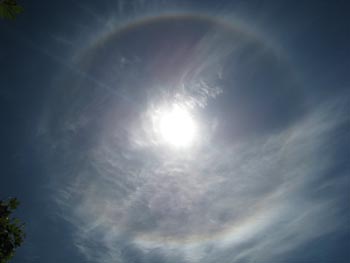
June 6, 2009 @Marina del Rey, CA - Auspicious phenomena: Buddha light (fading)
2009年6月6日在美國洛杉磯放生法會上空出現佛光(正在消失)

Great Dharma kings, Venerables, Rinpoches, monastics and at-home cultivators & laypeople chanting for the liberation of living beings.
法王,尊者,仁波切,法師與參加法會的大眾正在念誦。


Other incidences of Buddha light on separate occasions.
其他活動所拍到的佛光照。

GCBA Buddhist Seminar & FREE Medical Consultation 6/7/09


It is unfortunate that we are living in this dharma-ending age. Although there are many who study Buddhism, few truly achieve accomplishments and liberation, less coming and going at free will. Most people learning Buddhism have not had profound study in the Tripitakas, nor attain the abilities and accomplishments that can be achieved by practice of Buddha Dharma. These factors led to nothing but empty theories, non-comprehensive understanding of dharma, incorrect and even heterodox views, believing that chanting mantras and sutras equals cultivation. For this reason, Jiangjia Awangzaba Rinpoche hopes to attract those who express sincere and genuine interest in learning Buddhism through this open seminar to help understand how to achieve non-attachment followed by finding the path of enlightenment.

The Buddhist seminar and medical screening and consultation headed by Jiangjia Awangzaba Rinpoche of Great Compassion Bodhi Association is open to the general public. Jiangjia Rinpoche will focus on understanding the Purpose of Practicing Buddhism, the concept of Impermanence, and application of Buddhist teachings through the subject of "What is Cultivation?" People can sign up for free one-on-one sessions with Jiangjia Rinpoche that will take place after the seminar this Sunday.

Jiangjia Rinpoche was recognized by H.E. Dharma King Tsongkhan Angwang Hwadang DamBe Gyingtsan (Zongkang Angwang Huadan Danbei Jienzan), chief Dharma King of Kumbum (Ta'er) Monastery in China, as the seventh incarnation of Gyangya GongGuy Gyulna (Jiangjia Gongjue Jungnai) Rinpoche.

Also known as Dr. Henry H. Fung, Rinpoche is a renowned California dentist, acupuncturist, and Fellow of Academy of General Dentistry. He has long been well-known and respected in the medical, dental, and Buddhist community, naturally expressing compassion through action and selflessly sharing his knowledge and expertise with all he comes in contact with around the world.

The seminar is jointly organized by Bhante Chao Chu of Los Angeles Buddhist Union, Rosemead.

The seminar will be held from 1:00 pm to 4:00pm at Los Angeles Buddhist Union, 7833 Emerson Pl., Rosemead, CA 91770. Admission is free. Open discussion and questions are welcome. For one-on-one sessions for blessings and or medical consultation, please register with Margaret before the seminar.

For details, call Margaret at 626-203-9402.

大悲菩提會佛學講座及醫療義診

(六月七日下午 1 時至 4 時)

加州著名牙醫師、中醫針灸師、北美牙醫學院院士 馮恆義大師,旅居美國卅年,在加州行醫濟世, 自幼修行學佛,律己嚴謹,謙虛仁愛,跟隨 第三世多杰羌佛學習佛法十餘年。自此 馮院士深入經、律、論,大悲為本,真實菩提心普度衆生,平時待人接物處處以弘揚佛法饒益衆生為依歸。第三世多杰羌佛曾告知: 汝乃仁波切轉世,因緣成熟時自有高僧為汝認證。去年因緣成熟,經由 宗康‧昂旺華旦丹貝堅贊法王于二〇〇八年十二月十三日入觀觀修,空行指示、認證 馮恆義為 江嘉‧貢覺迥乃仁波切轉世,現為第七世,屬格魯派,取法名為 江嘉‧阿旺扎巴。

宗康‧昂旺華旦丹貝堅贊乃中國格魯派佛教最高領袖,是 宗喀巴大師出生地道場塔爾寺寺主法王,被中國政府特許具有認證仁波切權之聖僧。 宗康法王在認證 江嘉‧阿旺扎巴仁波切時並祈請空行護法加持仁波切弘揚如來正法、利益衆生,故 江嘉仁波切現在洛杉磯成立大悲菩提會道場揚 第三世多杰羌佛和 釋迦牟尼佛的正宗如來正法。

江嘉仁波切感嘆於此末法時期,雖然學佛之人甚多,但真正能成就解脫的人甚少,更談不上生死自由,來去自如。 許多學佛之人由于沒有深入經藏也沒有佛法的修證,知見多落于空洞理論,導致知見不正,法理不明,偏知邪見,以為持咒念經即是修行。 江嘉仁波切希望籍此座談會讓真正有心學佛的人知道“什么是修行” ,做到去我執,進而找到圓滿成就光明之道。


會中可自由發問。 江嘉仁波切於會談加持及親自施予醫療義診。此次座談免費入場地點是: 菩提寺 7833 Emerson Pl., Rosemead, CA 91770 。 需要加持與醫療者請電話聯繫 Margaret 瑪格瑞 (626) 203-9402 預約。